
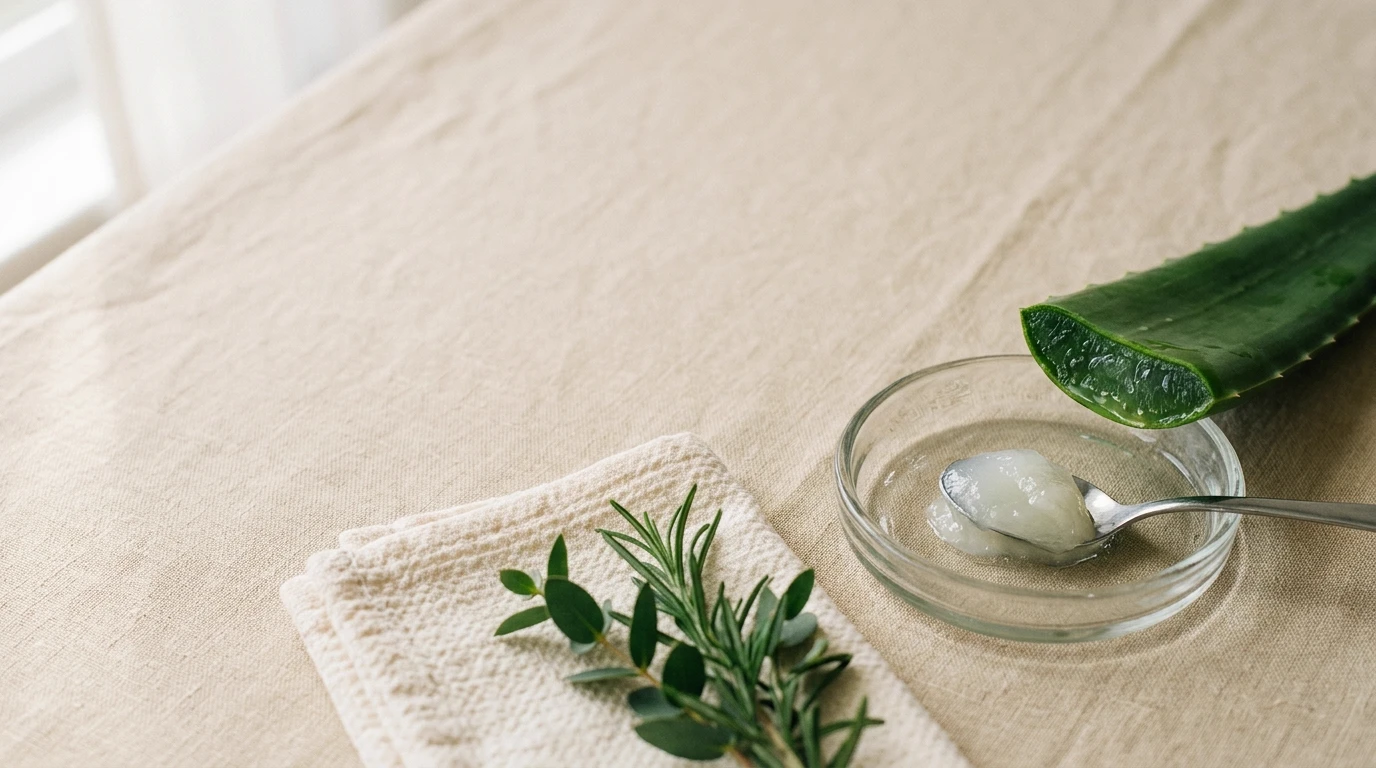
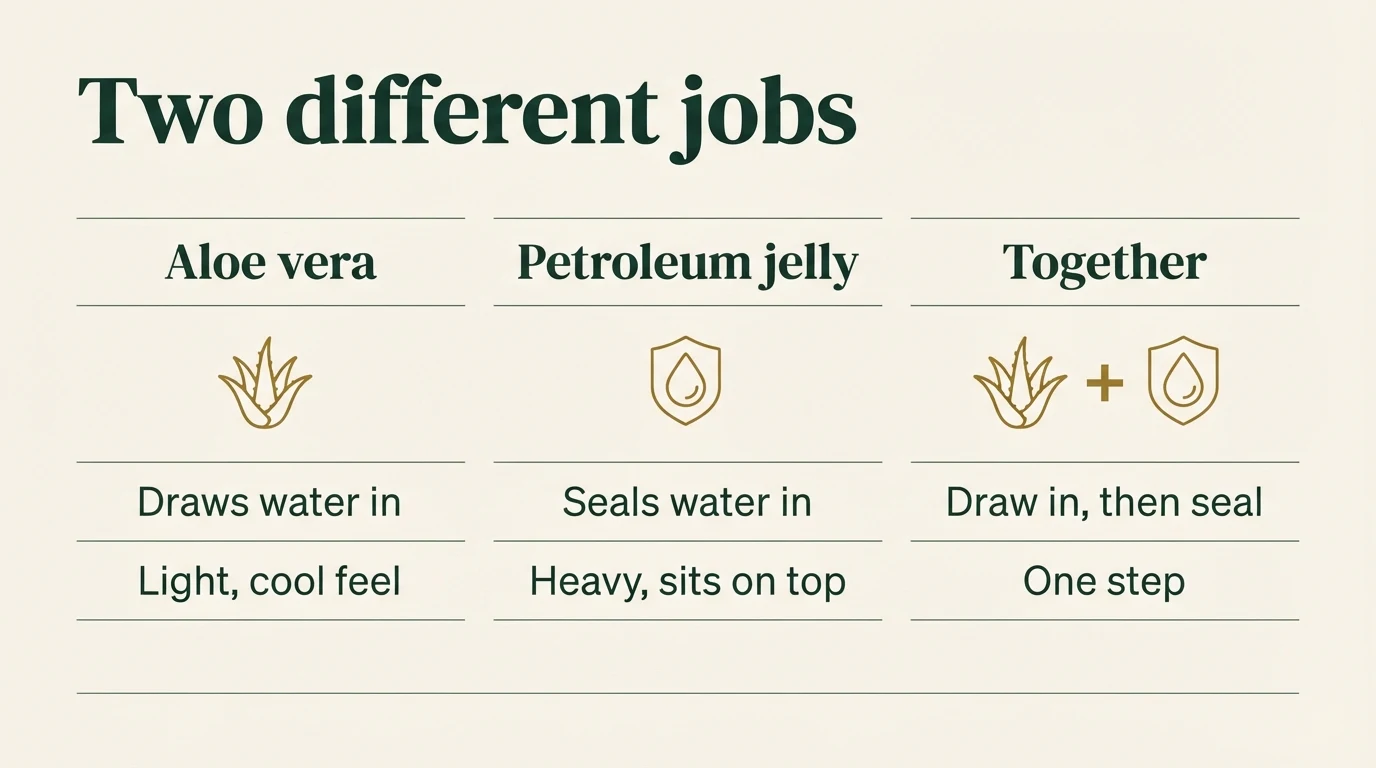
They do two different jobs. Aloe vera is a humectant: mostly water, it draws moisture into skin and goes on cool, but holds that moisture only lightly. Petroleum jelly is an occlusive: it adds no water, but seals in what is there — one dermatology review puts its cut in water loss at 98%. Dry skin usually needs both.
- Aloe vera is
- A humectant — its inner gel is about 99% water, with sugars that help bind moisture into skin.
- Petroleum jelly is
- An occlusive — it forms a water-resistant layer on top of skin and adds no water of its own.
- Where aloe vera falls short
- The film it leaves is thin, so the water it brings in can evaporate again.
- Where petroleum jelly falls short
- It can only seal in water that is already there, which is why it works best on damp skin.
- In Aloe Yami Balm
- Petroleum jelly, aloe vera extract and vitamin E extract, in one 50 ml jar (as of September 2026).
What does aloe vera actually do for skin?
It brings water in. A 2008 review in the Indian Journal of Dermatology describes the inner gel of the leaf as 99% water, with the rest made up of sugars, amino acids, lipids and vitamins. It notes that the gel's mucopolysaccharides — long sugar chains — help bind moisture into the skin.
That is what a humectant does. It is also why aloe vera feels cool and light the moment it goes on: most of what you are putting on is water.
It does leave something behind. Skincare formulators describe the sugars forming a thin, semi-permeable film that limits some water loss. Thin is the word to hold on to. On its own, aloe vera is better at bringing moisture in than keeping it there.
What does petroleum jelly actually do for skin?
It stops water leaving. Petroleum jelly is an occlusive: it sits on top of the skin as a physical, water-resistant layer. CeraVe's ingredient guide puts it simply — the barrier seals in moisture and helps prevent transepidermal water loss, the steady evaporation of water out through the skin.
It is unusually good at it. A 2022 editorial in the dermatology journal Cutis describes petrolatum as the most effective of the oil-based moisturisers at this, cutting water loss by 98%, against 20% to 30% for others.
What it does not do is add any water itself. Put it on skin that is already bone-dry and there is less for it to hold in.
How do aloe vera and petroleum jelly compare side by side?
They are close to opposites, which is exactly why they pair well.
| Aloe vera | Petroleum jelly | |
|---|---|---|
| Type of ingredient | Humectant | Occlusive |
| What it does | Draws water into skin | Slows water leaving skin |
| Adds water itself? | Yes — the gel is mostly water | No |
| Feel | Light, cool, absorbs fast | Heavy, sits on top |
| Falls short alone because | Its film is thin, so water can escape again | It can only hold in water already there |
| Best applied | First | After, on damp skin |
Which one is better for dry skin?
Neither, on its own — the order matters more than the choice. Dry skin needs water brought in, then kept there. Aloe vera covers the first step and petroleum jelly the second.
The American Academy of Dermatology's advice on petroleum jelly makes the same point from the other side: for the best results, apply it when your skin is damp. Damp skin — from a shower, or from a humectant like aloe vera — gives the occlusive something to seal in.
For a closer look at the aloe half of this, our guide on whether aloe vera is good for dry skin goes into the humectant side in more detail.
Why is a balm that combines both different to using either one alone?
Because it does both jobs in one layer. Used separately, you have to get the timing right: aloe vera first, then petroleum jelly before the water has a chance to evaporate. A formulated balm puts the humectant and the occlusive on the skin together.
That is the reasoning behind Aloe Yami Balm. Its three ingredients each have a job: petroleum jelly is the base that holds moisture in, aloe vera extract is the soother that goes on cool, and vitamin E extract is an antioxidant that looks after the balm itself, so a sealed jar keeps its condition.
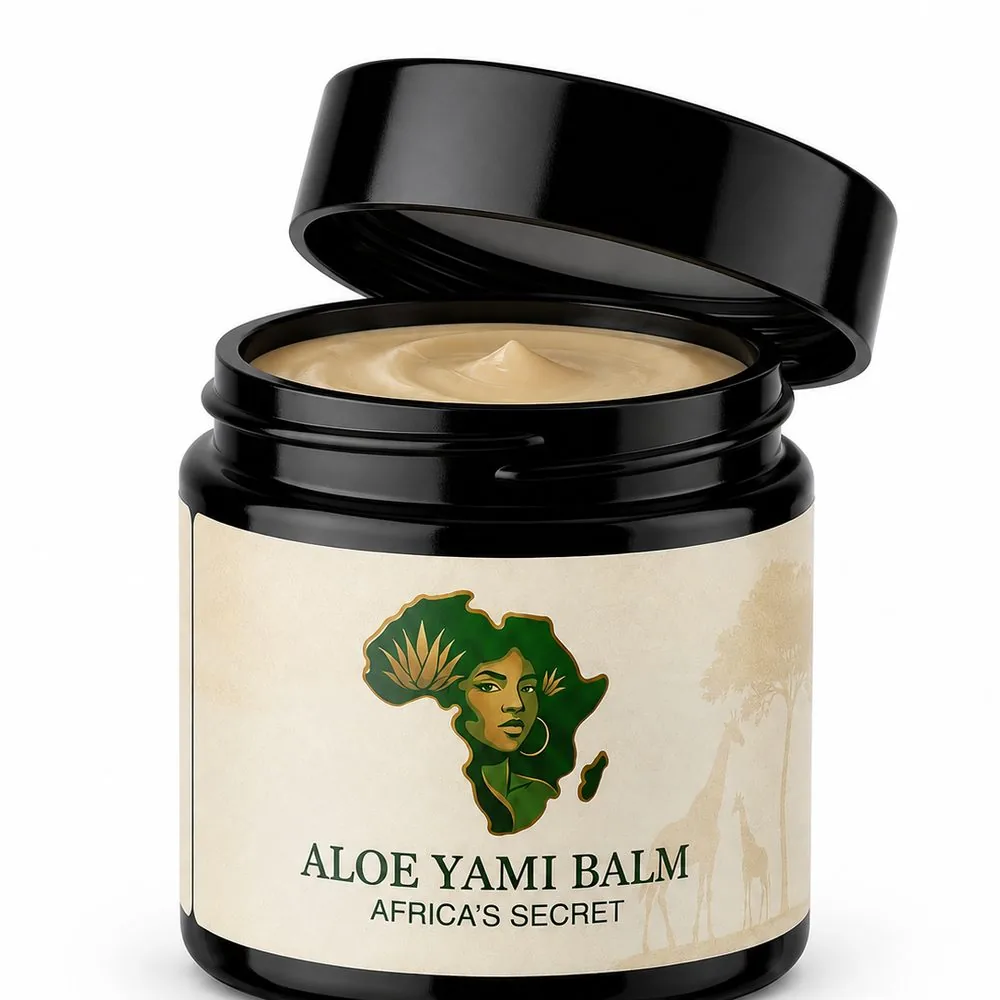
As the product page puts it: cut an aloe leaf open and it is mostly water. The petroleum jelly is what keeps the aloe where you put it. The balm is used on face, body and scalp, a pea's worth at a time.
Is petroleum jelly safe to put on your face?
For most people, yes — with one caveat worth knowing. The American Academy of Dermatology lists dry skin, including the thin skin of the lips and eyelids, as its first suggested use for petroleum jelly. It also says that if your skin is prone to breakouts, you may want to avoid putting it on your face, as it can cause them in some people.
Aloe Yami Balm's own label adds the usual cosmetic cautions: for external use only, avoid direct contact with the eyes, and stop straight away if any irritation comes up. A patch test before first use is sensible with any new product. The full label is on the product page.
This page describes what these two ingredients do in general. It is not a medical claim about any product. If a skin concern does not settle, a pharmacist or dermatologist is the right person to ask.
- Aloe vera brings water in — its gel is about 99% water, with sugars that help bind moisture to skin.
- Petroleum jelly keeps water in — it adds none, but cuts water loss sharply.
- Each falls short alone: aloe's film is thin; petroleum jelly needs damp skin to work with.
- Layered — or combined in one balm — they cover both halves of moisturising.
- If your face is prone to breakouts, go easy on petroleum jelly there.
Common questions
Is aloe vera or petroleum jelly better for dry skin?
Neither does the whole job alone. Aloe vera draws water into the skin but holds it only lightly; petroleum jelly adds no water but is very good at stopping it from leaving. Dry skin usually does best with both: something to bring moisture in, then something to seal it there.
Does petroleum jelly moisturise skin?
Indirectly. It does not add any water of its own. It forms a water-resistant layer on top of the skin that slows the moisture already there from evaporating, which is why the American Academy of Dermatology suggests putting it on while skin is still damp.
Can you use aloe vera and petroleum jelly together?
Yes, and they suit each other. The simple way is to layer them: aloe vera first, then a thin layer of petroleum jelly on top while the skin is still slightly damp. A formulated balm that already contains both does the same in one step.
Is petroleum jelly bad for your skin?
Not for most people. The American Academy of Dermatology lists dry skin, including lips and eyelids, as its first suggested use. Its one caveat is the face: if your skin is prone to breakouts, it suggests avoiding petroleum jelly there, as it may cause them in some people.
What is in Aloe Yami Balm?
Three ingredients, all printed on the jar: petroleum jelly, aloe vera extract and vitamin E extract. It comes in a 50 ml jar and is used on the face, body and scalp. It is a cosmetic, meant to moisturise and comfort the skin.
Still have a question about the balm, ordering or delivery? The help page answers the common ones, or send us a WhatsApp.
See both, in one jar
Aloe Yami Balm combines petroleum jelly, aloe vera extract and vitamin E in one 50 ml jar. The full ingredient list, how to use it and the safety label are on the product page.