

Start with something you can buy in a small batch and sell to people you already know. Before you spend a rand, check three things: what one unit really costs you, who your first five buyers are, and whether there is any joining or monthly fee. If the money would come from recruiting people rather than selling, walk away.
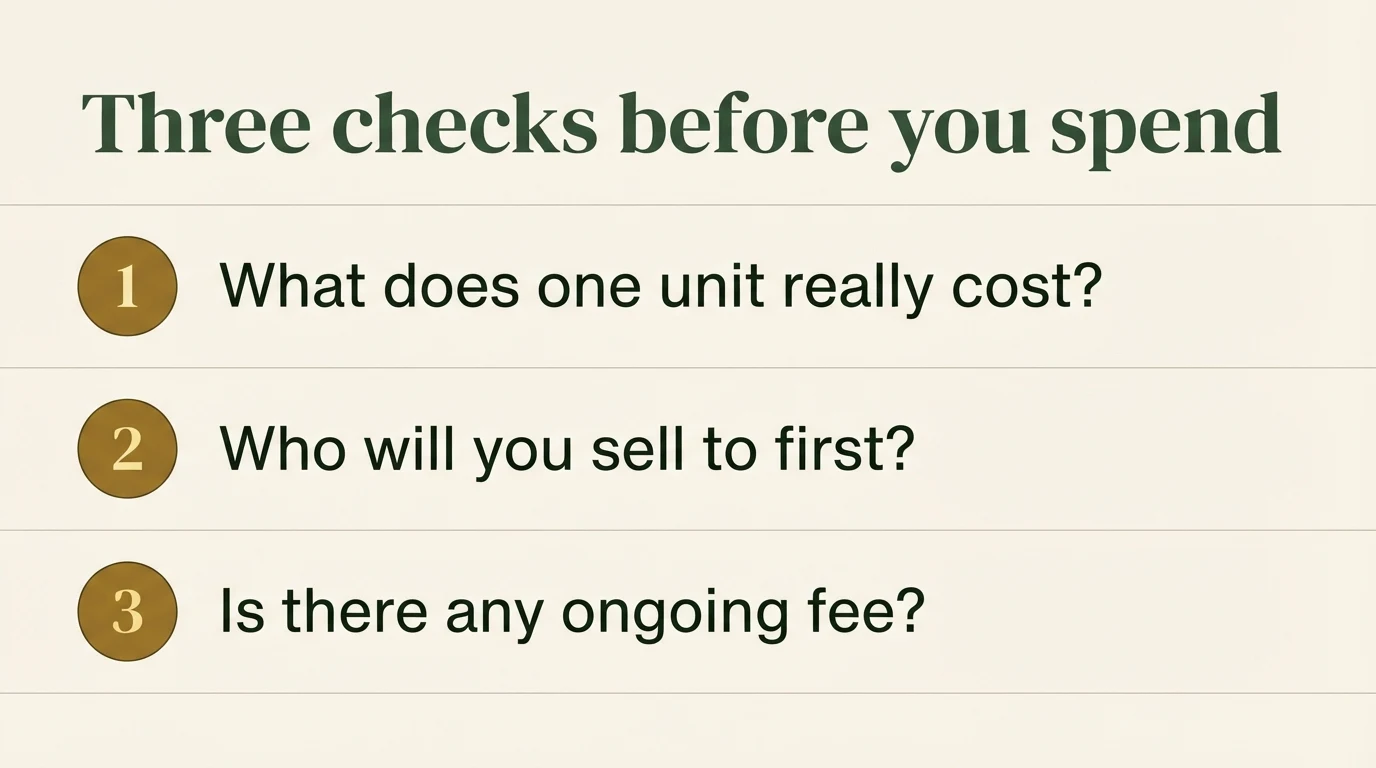
- The first check
- Work out the cost of one unit, including delivery, before you look at any selling price.
- The second check
- Name five real people who would buy from you this month.
- The third check
- Confirm there is no joining fee, contract or monthly minimum.
- The legal check
- If you would be paid mainly for recruiting people, the Consumer Protection Act calls it a pyramid scheme.
- Tax
- Side income goes on your own tax return; the 2027 tax-year threshold for under-65s is R99 000 (as of October 2026).
What should you check before spending anything on a side hustle?
Three things, and they apply to any product or service: the real cost of one unit, who will buy it first, and whether anything keeps costing you after you start. If you cannot answer all three on one page of a notebook, you are not ready to spend.
None of this needs an app, a course or a business plan. It needs a pen and an honest hour. Most money lost on side hustles is lost before the first sale, on stock nobody asked for or on fees that never stop.
How do you work out the real cost of one unit?
Take everything you pay to get the stock into your hands and divide it by the number of units. That means the price, plus delivery, plus anything you must buy to sell it, such as packaging. A R60 item with R75 courier on a five-unit order really costs you R75 each.
Then compare that to what people around you already pay for something similar. If your real cost is close to the shelf price at the nearest shop, there is no room for you in the middle, however good the product.
Who will you sell to first?
Write down five names. Family, neighbours, the people you work with, the people in your church or taxi or WhatsApp groups. If you cannot list five people who would plausibly buy in the first month, the product is not the problem yet; reach is.
Small sellers in South Africa mostly sell to people who already trust them. That is an advantage, not a limitation. It is why a product that is easy to explain in one sentence tends to suit a first side hustle better than one that needs a demonstration.
Why does an ongoing fee matter so much?
Because a monthly fee turns a slow month into a loss. If you buy stock once, a slow month just means the stock sits a little longer. If you pay a subscription, a membership or a monthly target, a slow month costs you money whether you sell or not.
Read the terms before you pay. Look for joining fees, starter-kit fees, minimum monthly orders, and anything that has to be sent back if it does not sell. Any one of those changes the sum.
How do you tell a real opportunity from a pyramid scheme?
Ask one question: where does the money come from? Section 43 of the Consumer Protection Act, 2008 describes a pyramid scheme as one where participants are paid mainly for recruiting other people, rather than for selling goods or services. Promoting or knowingly joining one is prohibited.
So the test is simple. If you would earn by selling something to a customer who wants it, that is trade. If you would earn by signing people up, or the pitch talks more about people than product, walk away.
Apply that test to us as well. Read what this is not and check it against the Act yourself, rather than taking our word for it.
Do you need to register a business or pay tax?
You do not need to register a company to start selling. A person trading in their own name is a sole proprietor, and SARS says the owner includes that business income in their own income tax return.
Whether you actually owe tax depends on your total income from every source, salary included. For the 2027 tax year (1 March 2026 to 28 February 2027), SARS sets the threshold for people under 65 at R99 000. If your side income starts to add up, speak to SARS or a registered tax practitioner.
What does a R475 start actually look like?
Here is one example of a low-cost start, with the sums shown in full. Aloe Yami sells Aloe Yami Balm, a 50 ml jar for face, body and scalp, by the pack. The smallest pack is five jars at R95 each, R475. Courier is R75, free from 20 jars. There is no joining fee, nothing to sign and no monthly minimum (as of October 2026).
The arrangement is the whole of it: buy the pack at our price, sell each jar at yours, keep the difference. The Army suggests adding 50% to what you paid and asks members not to go past 75%, so nobody undercuts the next street.
| Pack | You pay | Per jar | Suggested sell price | If every jar sells | Difference |
|---|---|---|---|---|---|
| Starter, 5 jars | R475 | R95 | R143 | R715 | R240 |
| Grower, 10 jars | R900 | R90 | R135 | R1 350 | R450 |
| Builder, 15 jars | R1 275 | R85 | R128 | R1 920 | R645 |
Run the three checks on that. One jar costs R95, or R110 once the R75 courier is spread over a five-jar pack. Sell all five at R143 and the R240 difference becomes R165 after courier. The number nobody can fill in for you is how many jars sell, and how fast.
The jars are yours once they arrive, with nothing to send back and no deadline. The full order form, with the total shown as you go, is on the start page, and the questions people ask first are answered on the help page.
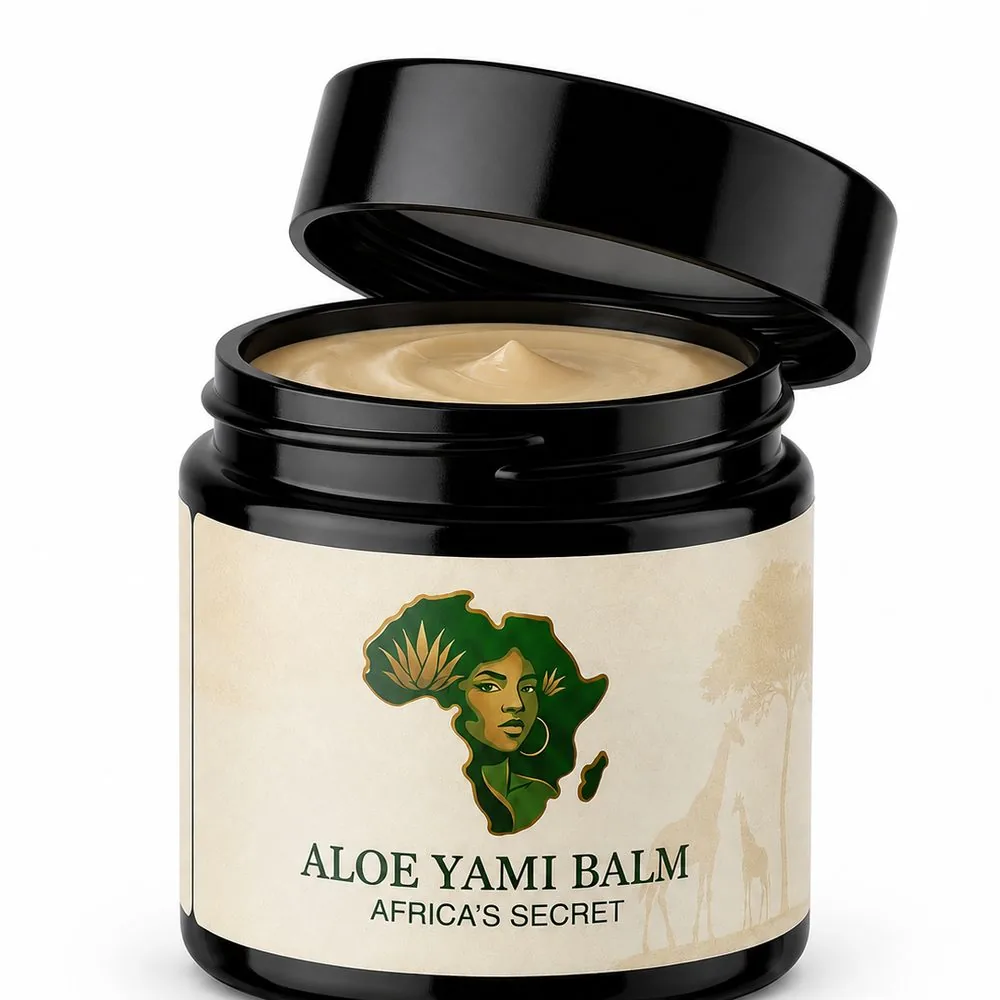
This is one option among many. The three checks above are the point of this page, and they work just as well on anything else you are weighing up.
- Before you spend, know the true cost of one unit, delivery included.
- Name five people who would buy in the first month.
- Avoid anything with a joining fee, monthly minimum or contract you cannot walk away from.
- If the money comes from recruiting rather than selling, it fails the Consumer Protection Act test.
- Side income goes on your own tax return. How much you make depends on how much you sell.
Common questions
What is the cheapest way to start a side hustle in South Africa?
The cheapest start is one where you can work out the cost of a single unit, name the first people you would sell to, and confirm there is no monthly or joining fee. A small batch of stock you already know you can sell costs less to test than equipment, a course or a membership.
Do I have to register a business to start a side hustle?
Not to start selling. A person trading in their own name is a sole proprietor, and SARS says the owner of a sole proprietorship includes the business income in their own income tax return. If your side income adds up, speak to SARS or a registered tax practitioner about what you must declare.
Do I pay tax on side hustle income?
Side hustle income is income, and it belongs on your own tax return. Whether you owe tax depends on your total income from every source. For the 2027 tax year (1 March 2026 to 28 February 2027), SARS sets the threshold for people under 65 at R99 000.
How do I tell a real side hustle from a pyramid scheme?
Ask where the money comes from. Section 43 of the Consumer Protection Act describes a pyramid scheme as one where participants are paid mainly for recruiting other people, rather than for selling goods or services. If you would earn by selling something to a customer, that is trade. If you would earn by signing people up, walk away.
How much does it cost to start selling Aloe Yami Balm?
R475 for the five-jar Starter pack, which is R95 a jar, plus R75 courier. Courier is free from 20 jars. There is no joining fee, no contract and no monthly minimum.
How much will I make selling Aloe Yami Balm?
Nobody can tell you that, because it depends on how many jars you sell. The sum is simple: sell a R95 jar at the suggested R143 and the R48 difference is yours. Sell all five and you take R715 on a R475 pack, before the R75 courier.
Still weighing it up? The help page covers the money, the stock and the arrangement, or send us a WhatsApp. To see what you would keep at a different price, use the calculator.
See the whole price list
Three packs, one price for everyone, and the total in front of you all the way down the order form.